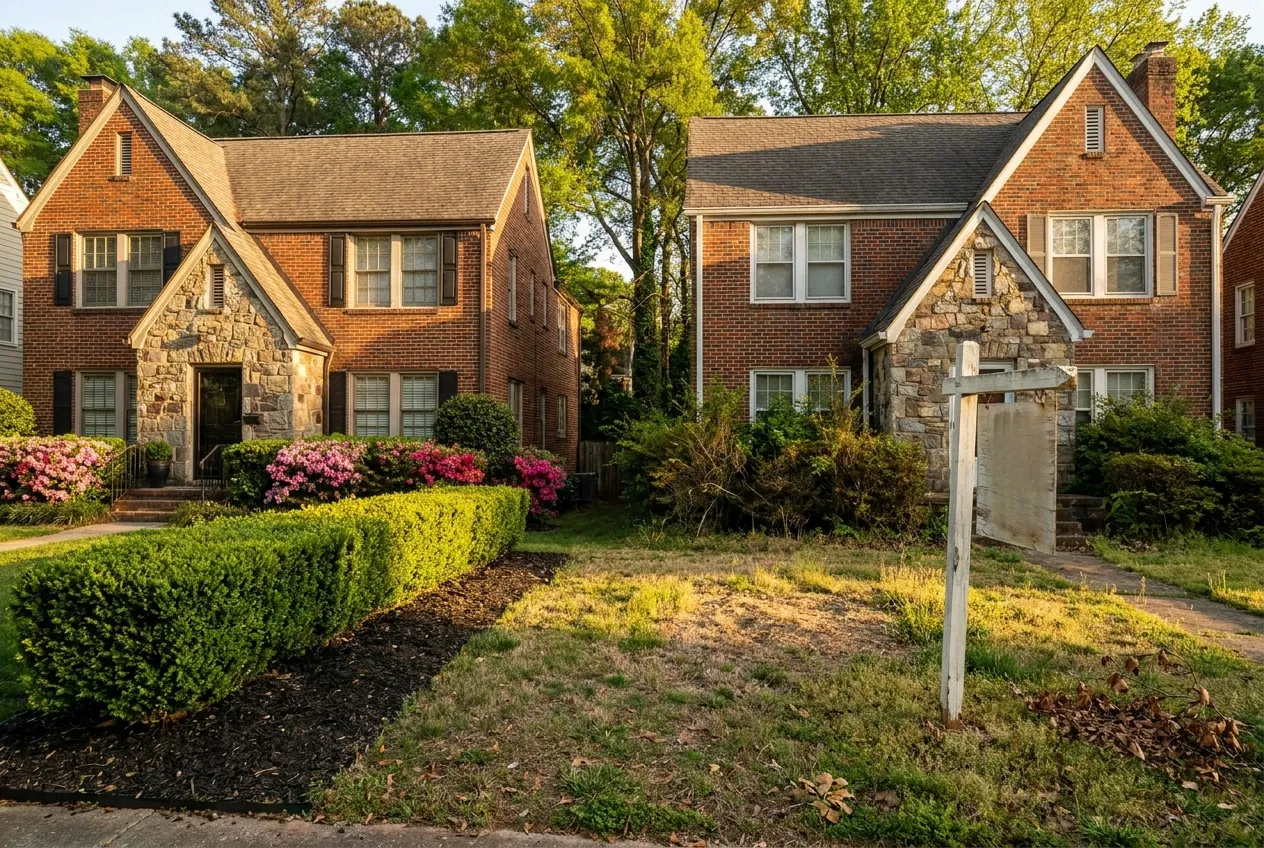
When the comps came back thirty thousand dollars apart on two nearly identical homes, the obvious question was: why?
Same builder. Same floor plan. Same square footage. Different community. Different story.
The realtor did not soften it. She said to drive through both communities and pay attention. One looked maintained. The other looked like it had been coasting for years. The landscaping was patchy and uneven, not badly neglected, just clearly not being serviced to the standard that was contracted. The pool area had visible equipment issues. The signage at the main entrance was sun-faded and had not been updated in what looked like several years. Buyers pulled in, saw it in twenty seconds, and either submitted a low offer or moved on to the next listing.
Not one dollar of that thirty thousand gap was about the house itself. It was about the community surrounding it. The quality of the shared property, the landscaping, the amenities, the common areas, is the first thing a buyer sees and the fastest thing to either inspire confidence or trigger doubt.
For years, the HOA in that community had been paying vendors who were not fully delivering on their contracted scope. The landscaping contract said weekly edging. It was not happening weekly. The pool contract said equipment inspection monthly. Nobody was independently verifying whether it was actually done. The signage and entrance improvements that had been discussed at board meetings for two years had never been formally scoped or overseen, so they kept getting pushed.
None of this was visible in any single month. Taken together across several years, it produced a community that looked managed but not cared for, and buyers can tell the difference.
This is the financial argument for independent oversight that rarely gets made directly: the cost of vendor accountability is not just the wasted money on services not rendered. It is the compounding impact on property values when a community drifts into visible decline because no one was watching the work.
A thirty thousand dollar gap on a resale is a direct, measurable consequence of the accountability gap. Multiply it by every home in the community and the number becomes very large very quickly.
CAP was built in direct response to this reality. Not because vendors are dishonest, but because the system that should hold them accountable does not exist in most communities. We are that system.